Our tradition
A craft that can
be explained
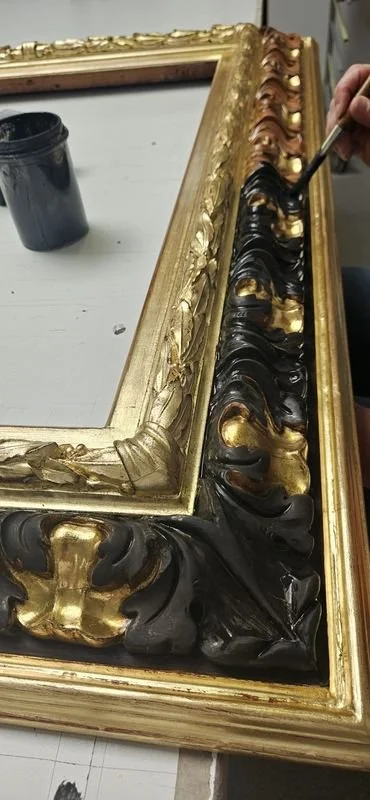
Much of our work cannot be seen in the finished piece: the many layers of gesso beneath the gold, the decision not to intervene, the experience behind every practised movement. Here we make it visible.
In detail
Leaf by leaf: gilding by hand
A leaf of gold is thinner than a ten-thousandth of a millimetre — and yet it lasts for centuries. In our workshop we gild frames, surfaces and objects in water and oil gilding, as the trade has taught it since the Renaissance.
From ground to gloss
Water gilding in five steps
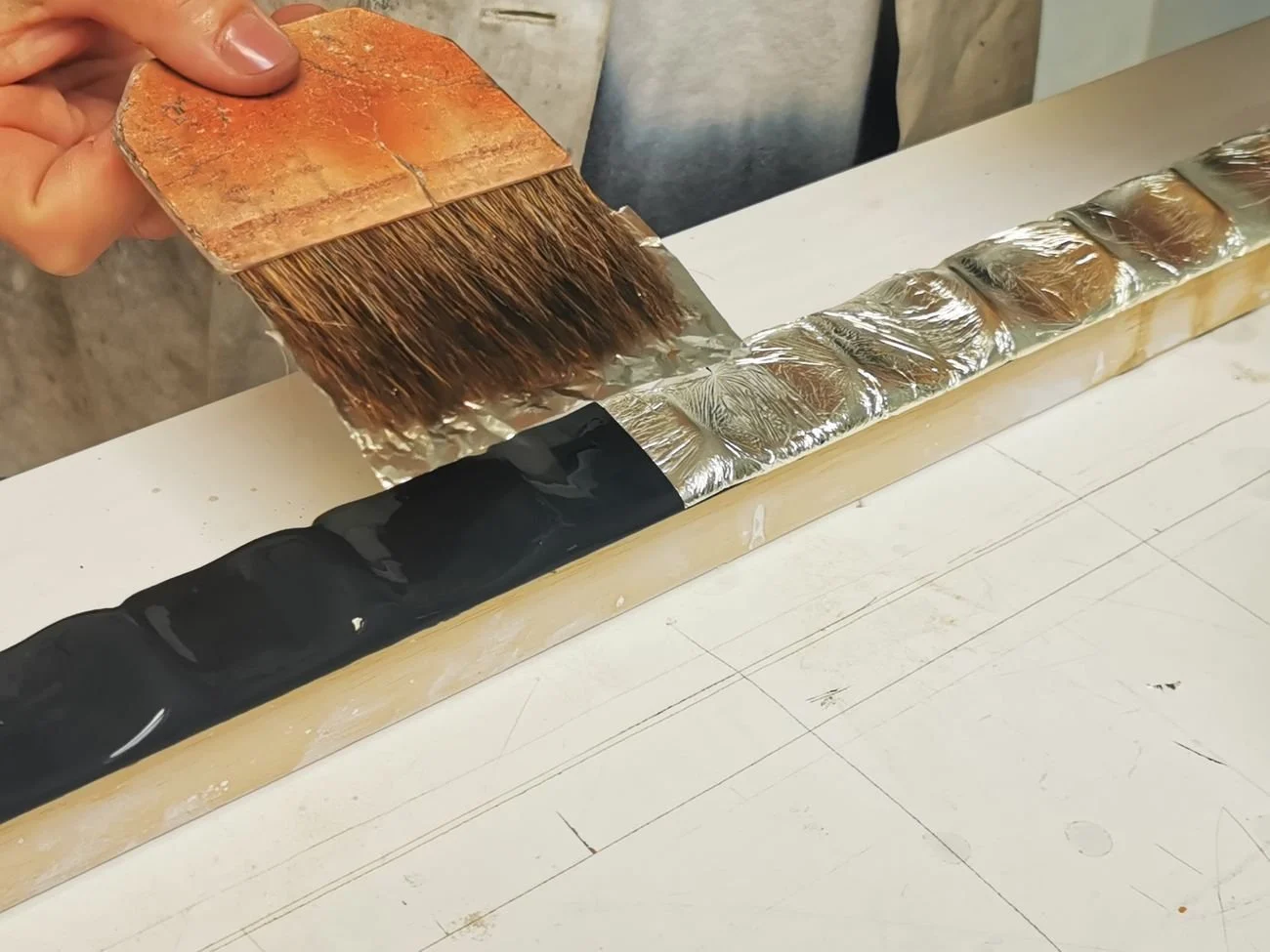
Laying the ground
Gesso in up to ten layers — each one sanded back until the surface looks like ivory. This is where it is decided how the gold will sit later.
Applying the bole
The coloured bole — usually red, sometimes grey or yellow — gives the gold its depth. Its tone shows through later and sets the character of the finish.
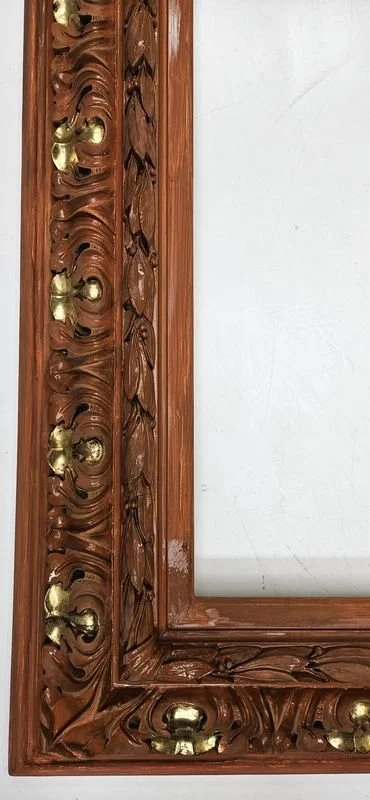
Laying the leaf
The leaf is picked up with the gilder’s tip and laid onto the wetted surface. One breath at the wrong moment and the leaf is gone.
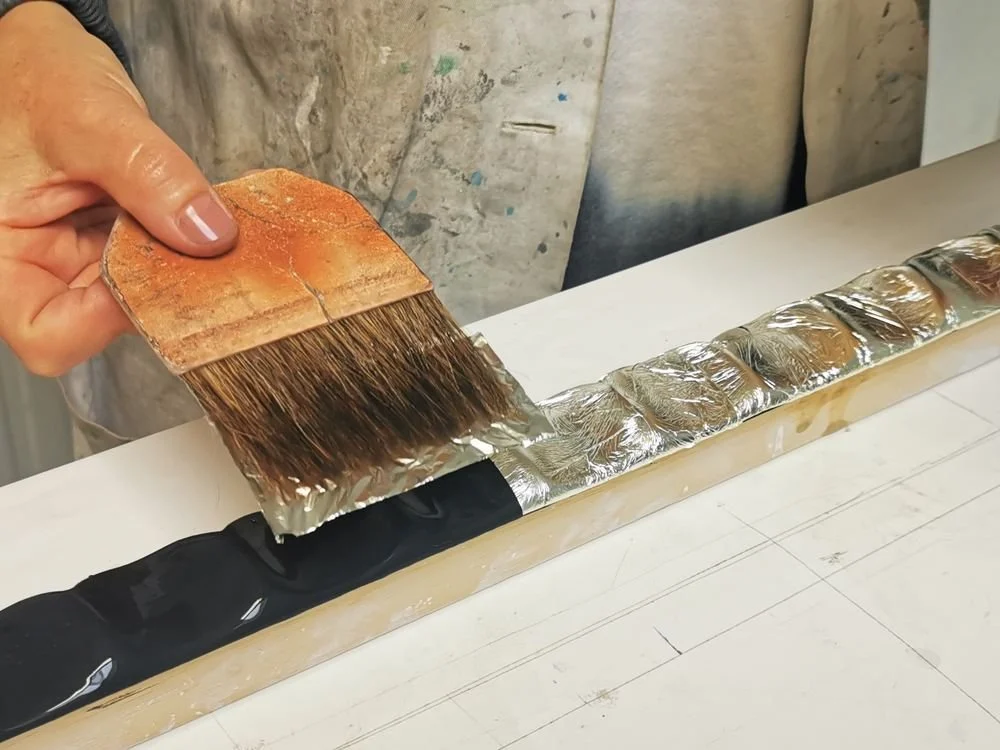
Burnishing
The agate burnisher brings the gold to a high gloss. Only now does water gilding show the deep, unmistakable shine that belongs to it.
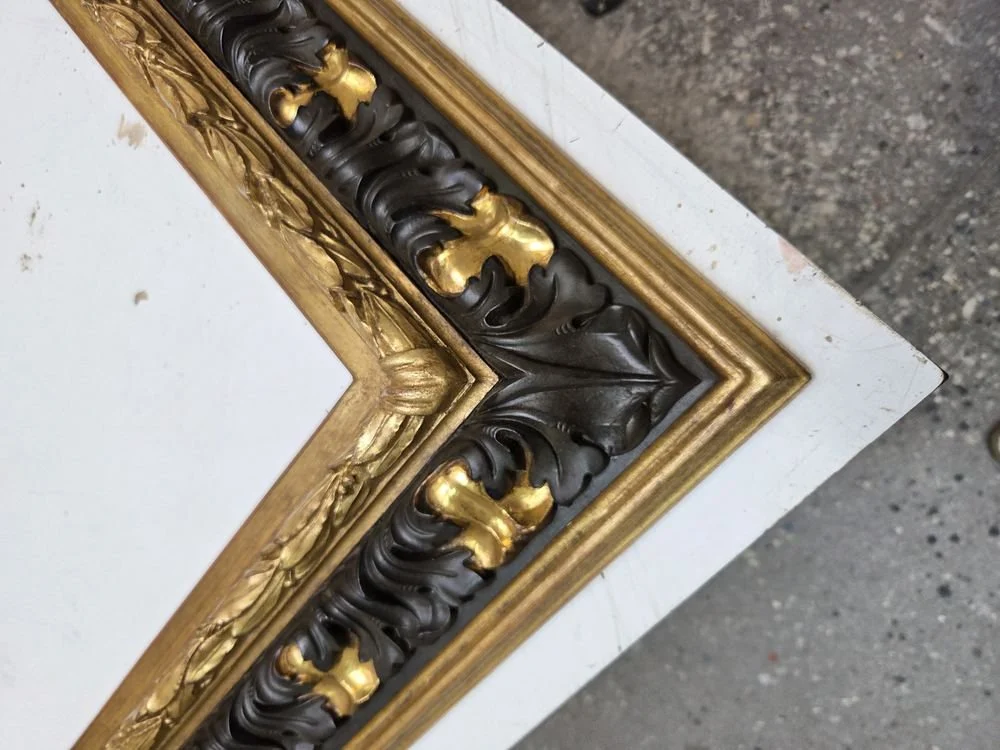
Toning
If you wish, we age the finish: toning and patina let new gilding sit beside historical material — without passing itself off as old.
Materials
What we work with
Gold leaf
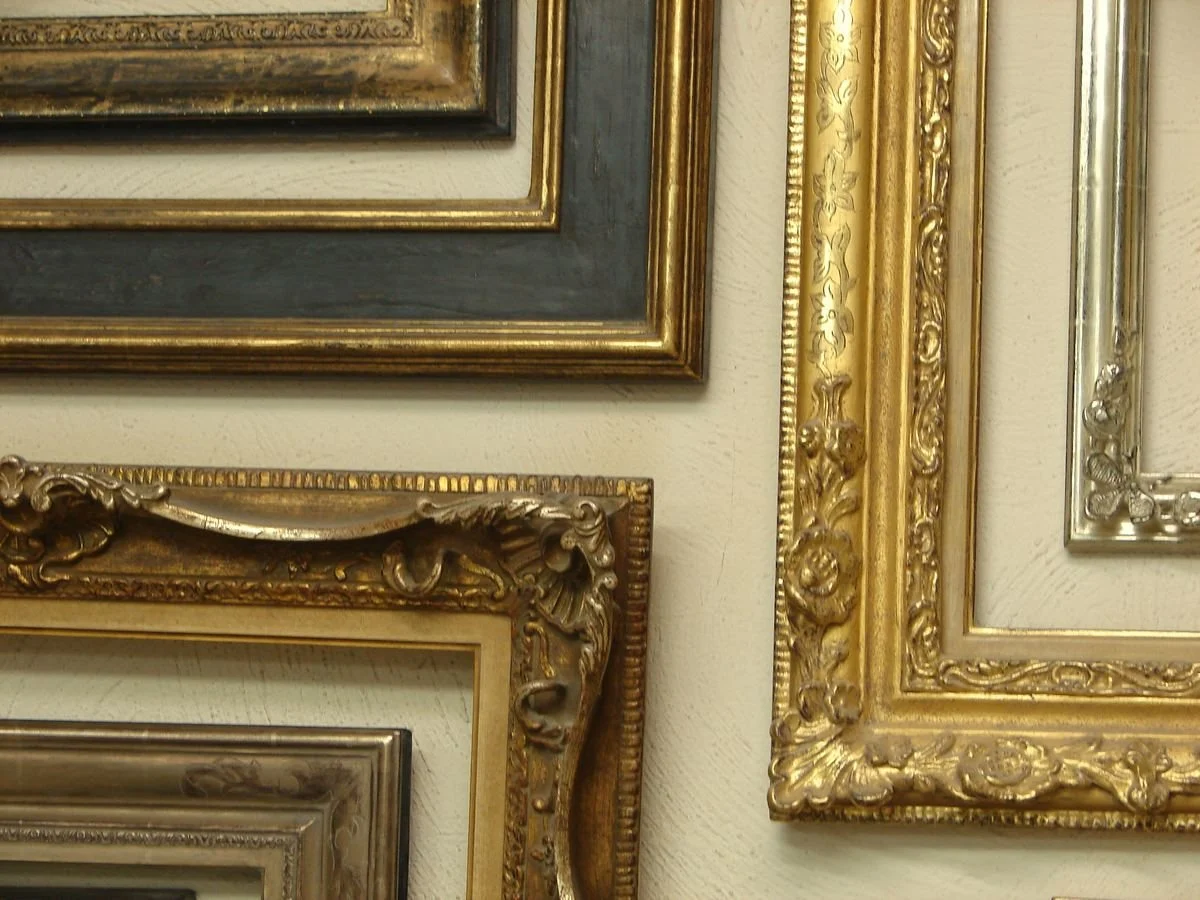
For finishes with the greatest brilliance and durability — the choice for museum work and ecclesiastical objects.
Cool finishes
Modern frames with high-gloss white gold surfaces — restrained, precise, contemporary.
Special requests
Any toning, any tint, any metal — we carry out unusual finishes too.
Common questions
All about gilding
What does gilding cost?
That depends on the area, the technique and the condition. After we have seen the piece in the workshop you receive a binding quotation — for insurers as well.
Water gilding or oil gilding?
Water gilding can be burnished to a high gloss and reads deeper — it belongs indoors. Oil gilding is more weather-resistant and matt. We advise at the object itself.
Can old gilding be kept?
Often, yes. We examine the findings and fill in only what is missing — historical material is left untouched wherever possible.
Would you like to see it for yourself?
In the workshop we will gladly show you how gesso, bole and gold leaf become a finish.