When water loosens the glue
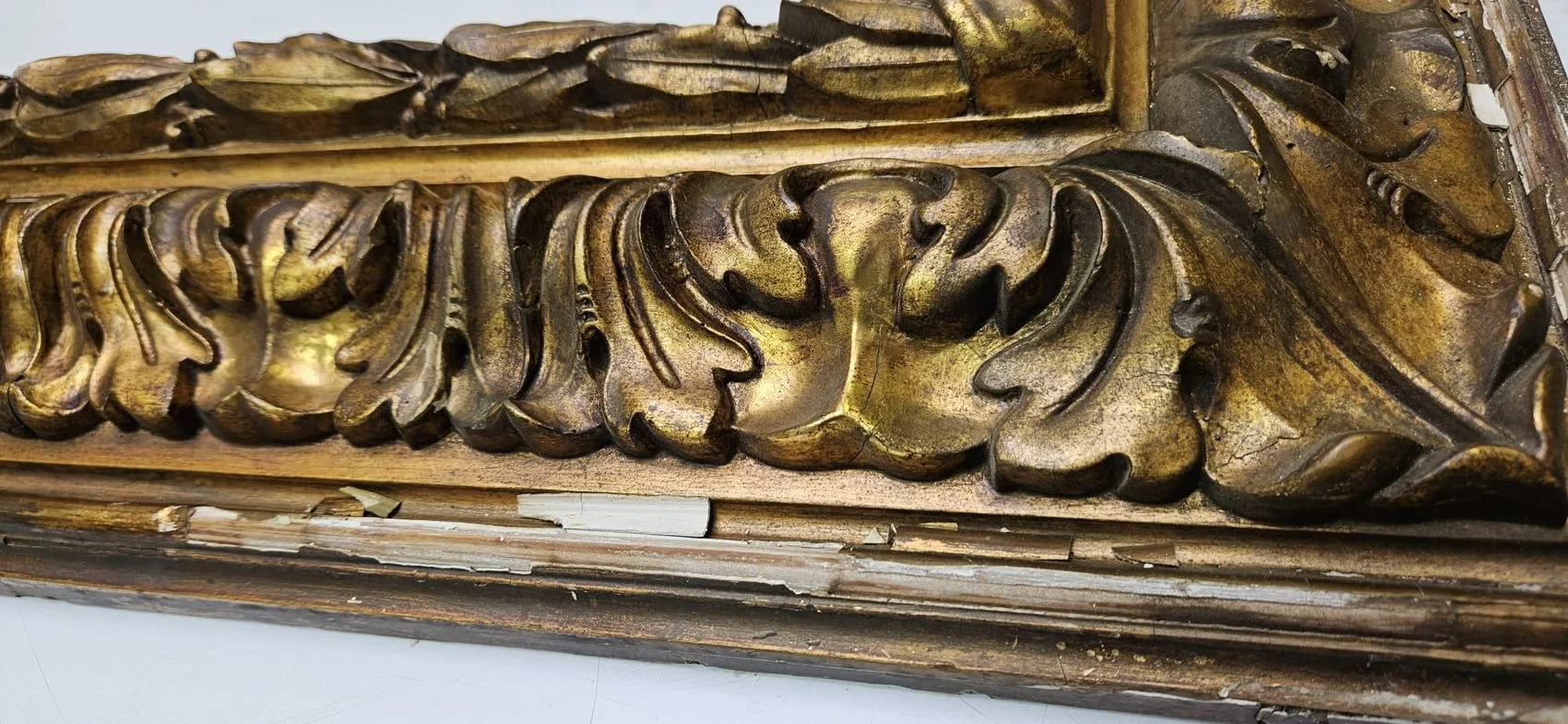
A carved mirror frame came to us with the finish flaking away over large areas. The wood had not suffered — what had suffered was everything that had been lying on it for over a hundred years. An insurance case, and therefore a job documented from the very first photograph.
The findings
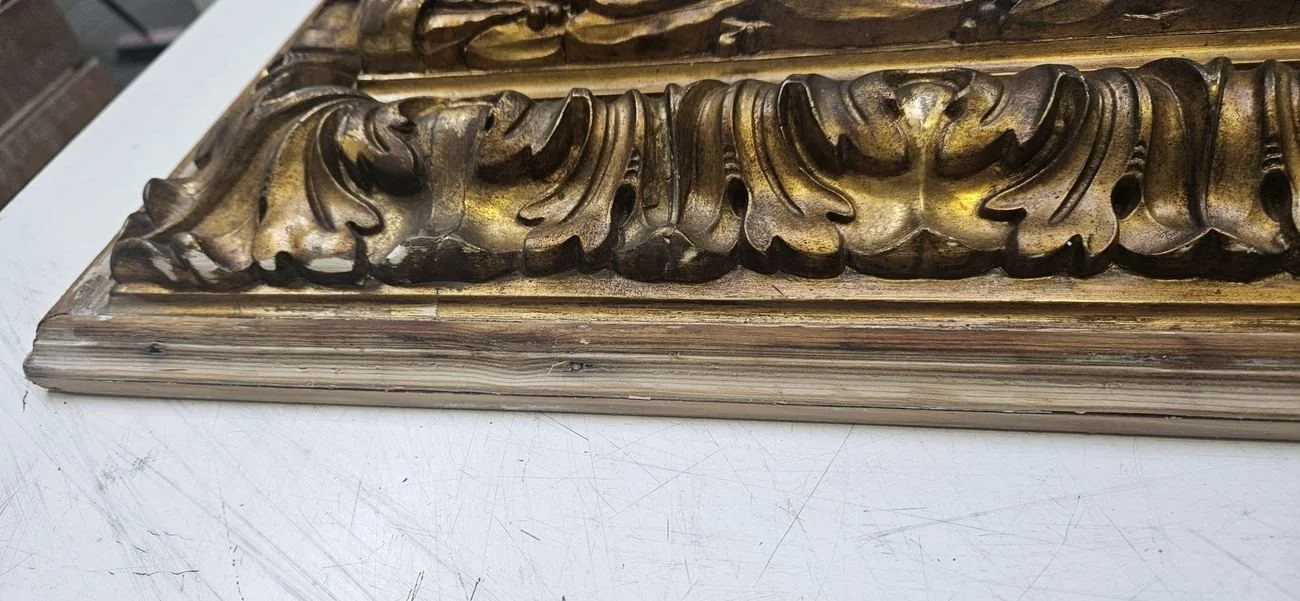
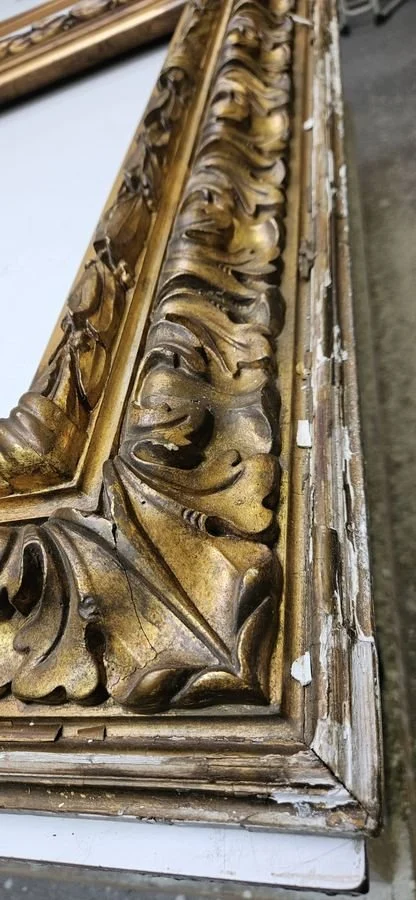
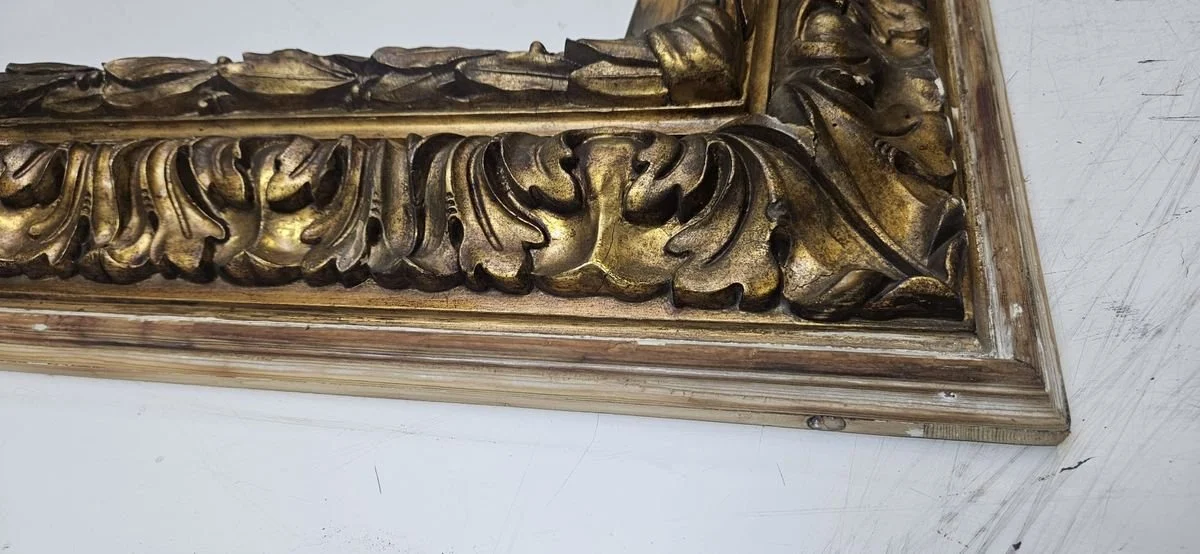
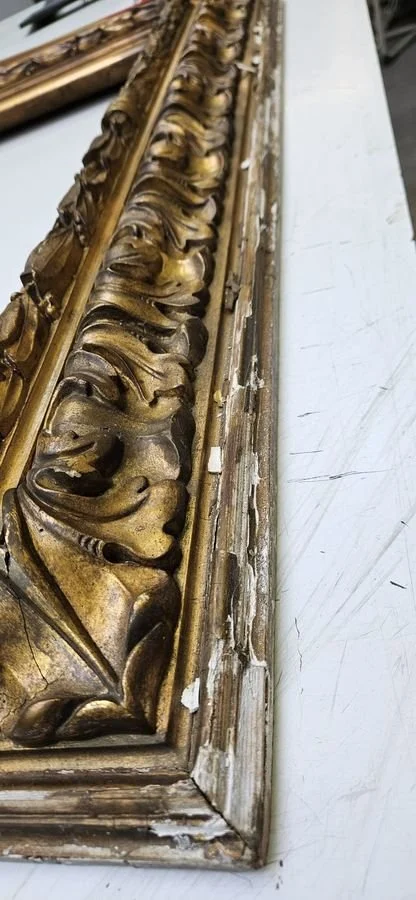
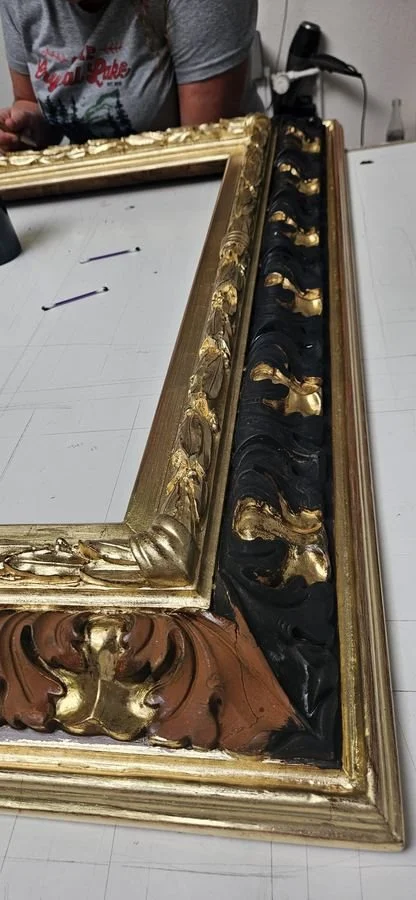
At first sight a frame like this looks lost. On the outer moulding the finish was missing along its full length, the bare wood lay exposed, and the gesso stood away in flakes — hard, brittle and so loose that it sprang off at a touch. The carved acanthus band above it was dull and covered in a fine network of cracks.
Between the leaf tips the old gilding was still holding. Where the ornament is deepest the finish sits best — and that is exactly where the examination begins.
An insurance case
The damage was a matter for the insurer, and that changes how the work is done before the first loose flake is consolidated. What comes first is not the brush but the camera. The condition on arrival in overview and in detail, each loss photographed separately, a written report setting out the damage and its cause, and a quotation that itemises the stages of work.
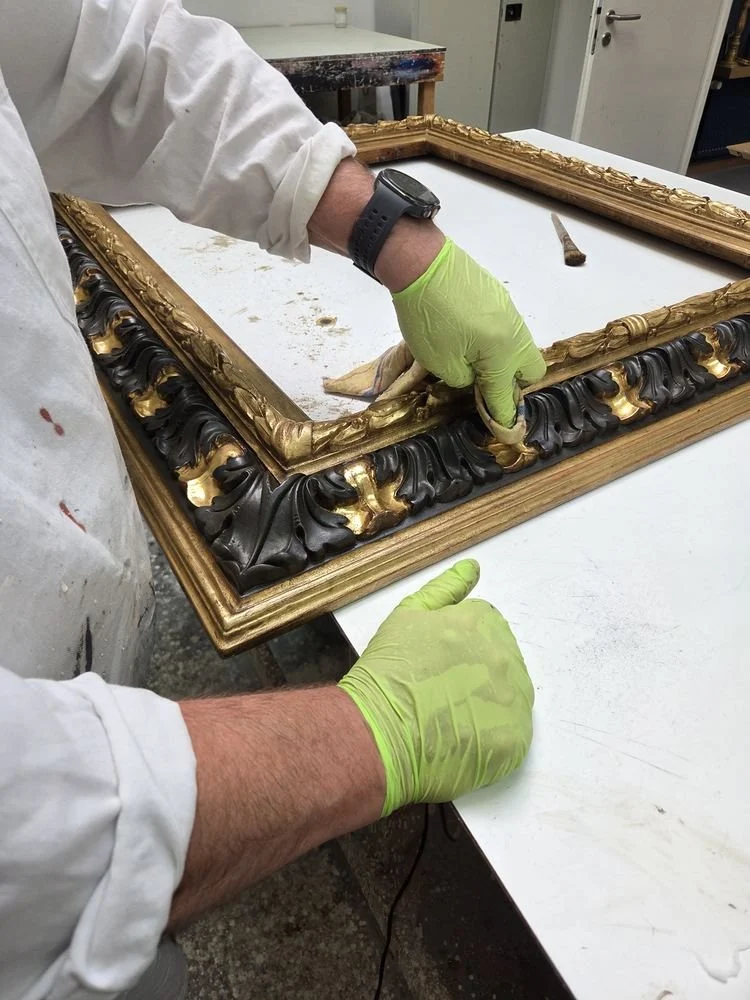
The documenting continues throughout. Every intermediate stage is recorded, every addition named — the pictures in this post are part of that documentation. At the end there is a report setting the original condition, the measures taken and the final condition side by side, so that all three can be followed.
For an insurer, only what is documented has happened.
For you as the owner this means you receive the report, the quotation and the final account in a form a claims handler can check without ever having seen the frame. And you do not have to translate between the workshop and the insurer.
What water does to a finish
Under every classical gilding lies a build-up of chalk and animal glue — ten layers and more, each one sanded on its own. That glue is the reason a finish can still be taken off after two hundred years. And it is its weak point.
Glue that has once drawn water does not let go of the wood — it lets go of the gesso.
Moisture softens the glue bond. As it dries, the gesso contracts more than the wood beneath it, lifts and tears. What is left are flakes still attached only at their edges. Wipe them away and they are gone; leave them untreated and they are gone at the next transport.
That is why the first step is not gold but consolidation. Every flake still holding is laid back down and pressed into place before anything is made good. What can be saved stays.
Making good where something is missing
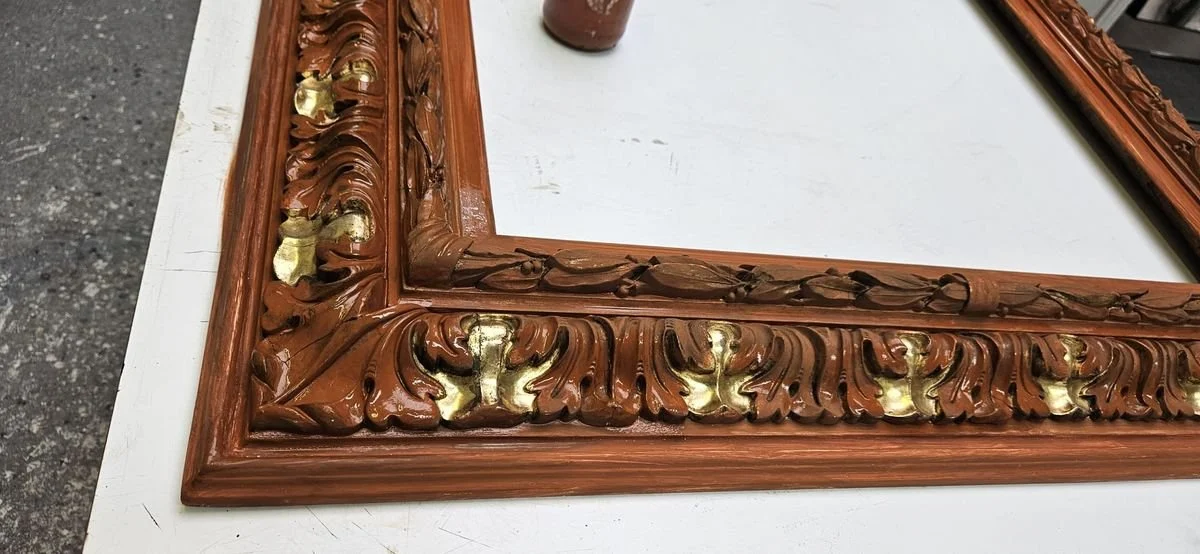
The losses are filled with gesso, layer by layer, and sanded back until the profile edge runs true again. It sounds like little and it is the longest stage of the work. A moulding that ripples in raking light gives away every piece of carelessness the moment it hangs on a wall.
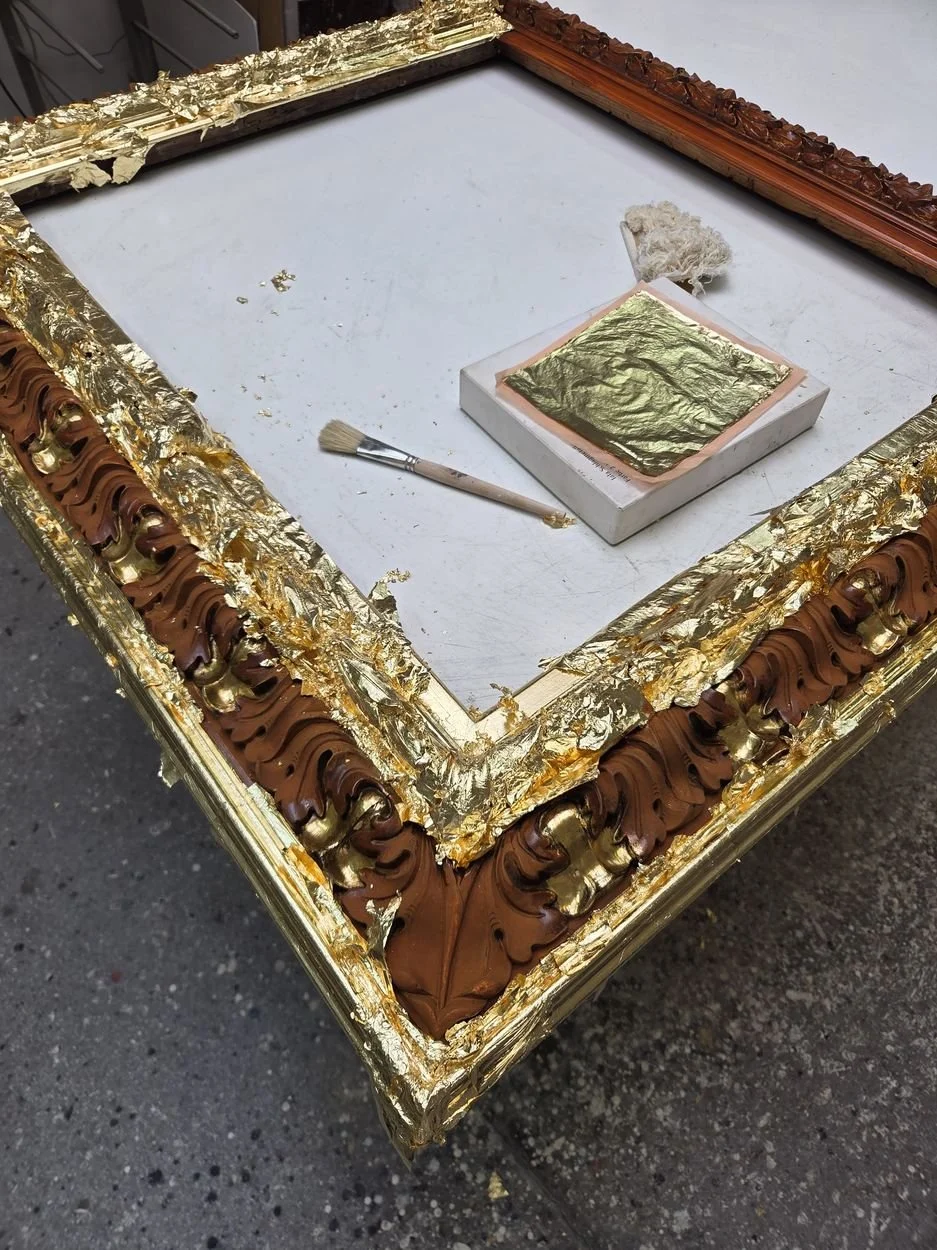
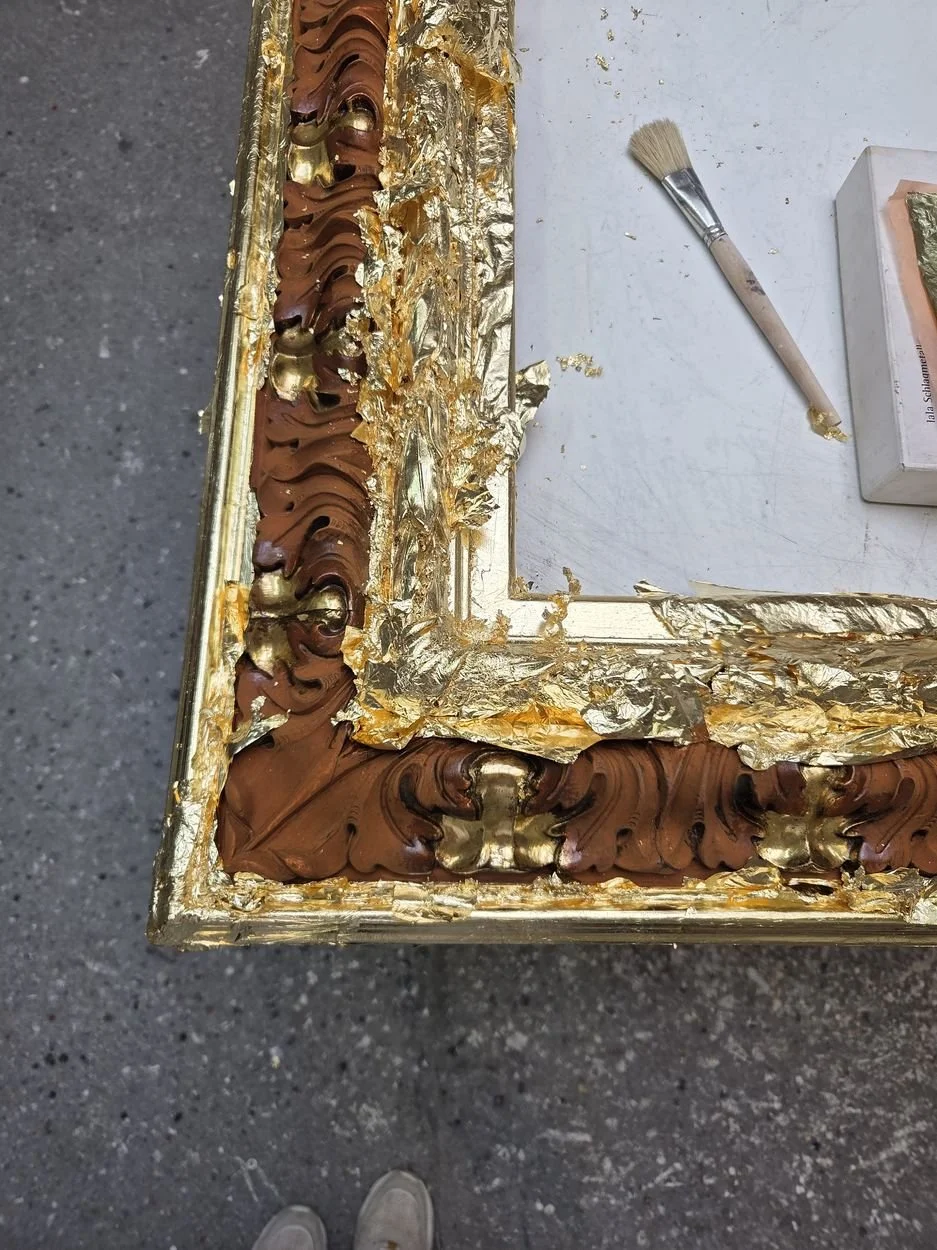
Onto the dry ground goes the bole — the red clay that makes the gold burnishable later and gives it its depth. Only once that is right does gilding begin.
Closing the finish
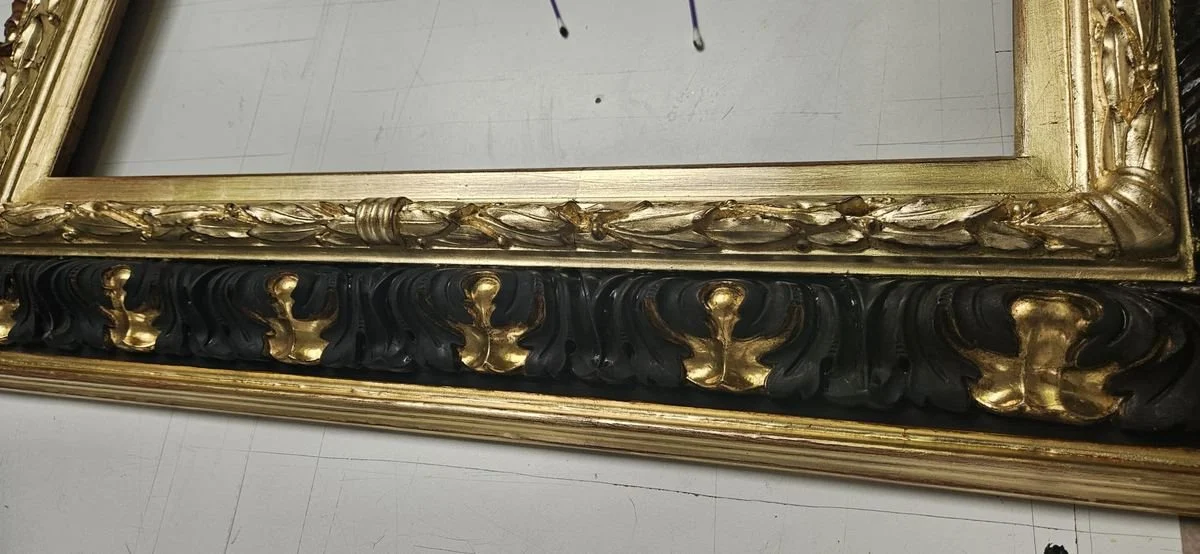
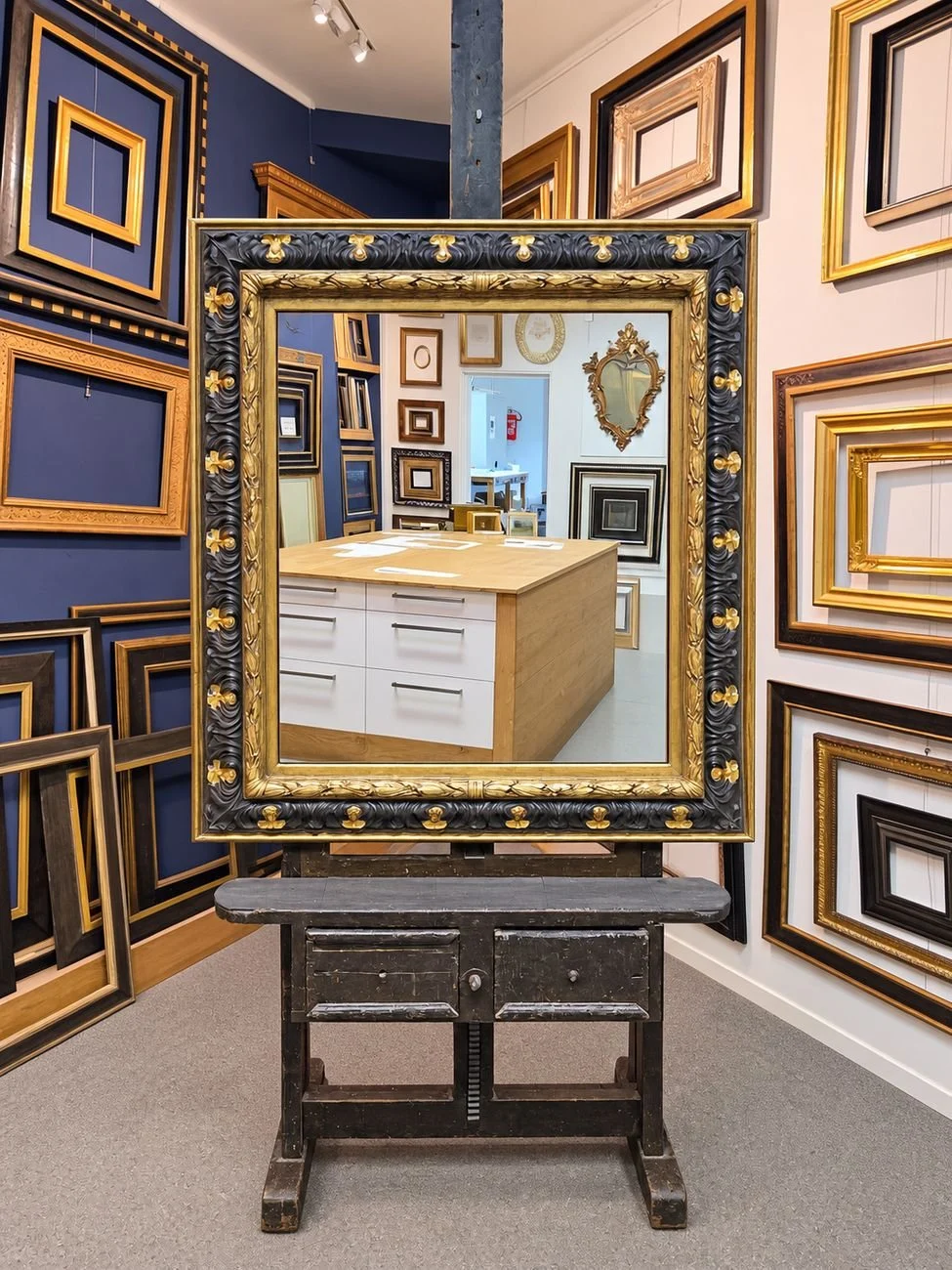
This frame lives on contrast: a darkly finished acanthus band from which only the burnished leaf tips step forward, framed by two quiet gold mouldings. The new passages had to fit into what was there without drowning it out — and without pretending they had always been there.
So it was toned, patinated and held back at the edges until old and new stand in the same light. From half a metre away you see a frame. From twenty centimetres a specialist sees where the work was done. That is exactly how it should be.
The result
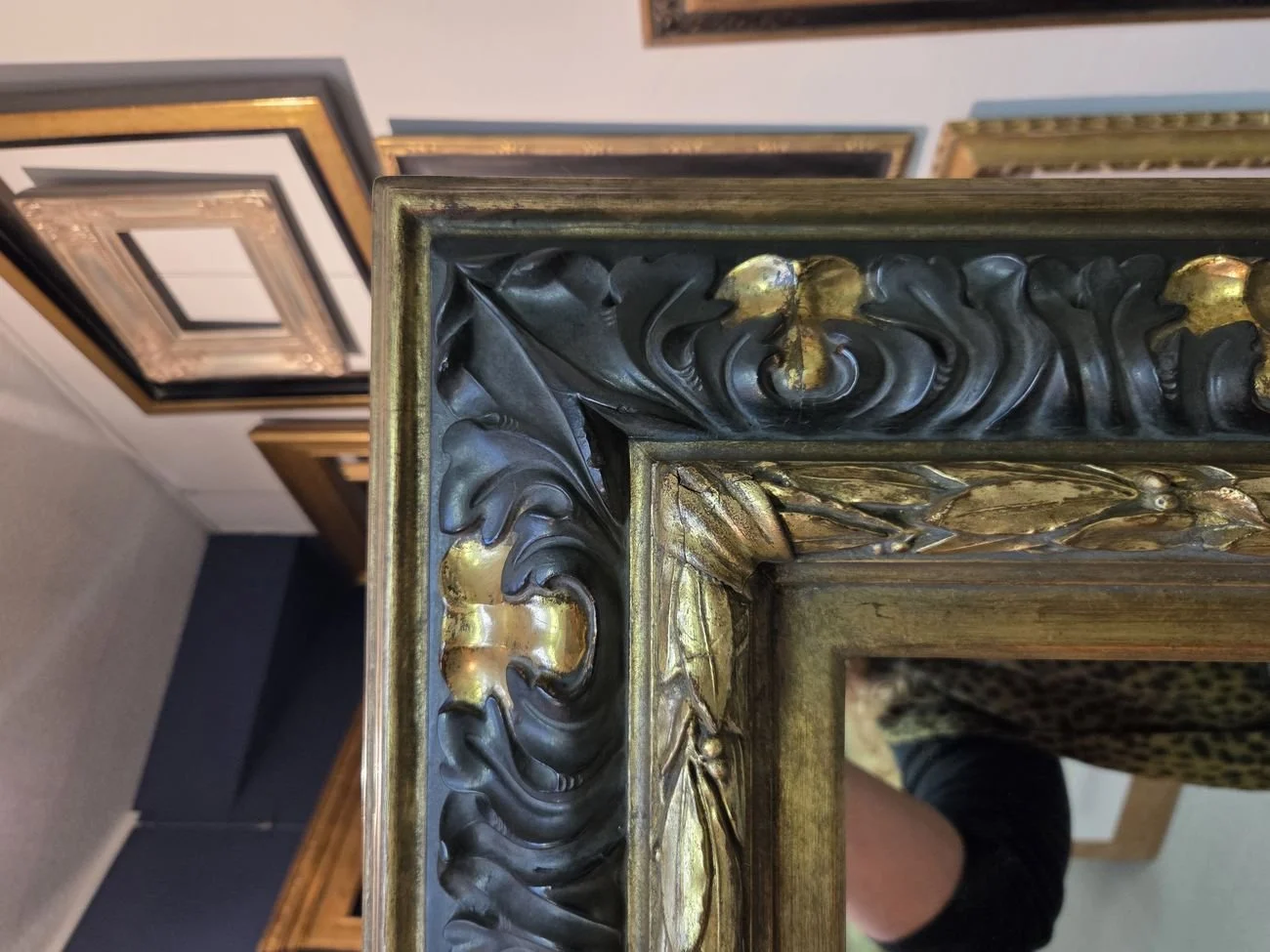
The mirror is hanging again. The profile edges run true, the ornament carries its shine only where it is meant to, and at normal viewing distance there is nothing left of the damage to see.
What remains is this: everything we did can be taken off again. A conservator in fifty years will see where we intervened — and will be able to undo it, if that is what they think right.
Similar damage to a frame of yours? If it happens: wipe nothing away, glue nothing back — keep the loose pieces and call us. For insured damage we take on the documentation.
Submit an objectWater damage, transport damage, a fall?
We record the damage, document it and draw up the quotation — for your insurer too.